
The phenomenon of “true crime” as entertainment is disturbing. What we are saying when we subscribe to watch these compellingly morbid shows is that, of course, we don’t “enjoy” or condone the crimes themselves. But, we do increasingly expect that without the grotesque detail of primary crime scene evidence, documented visually, we can switch over to another show that will give us our macabre kick. So, it is a dangerous precedent to say that without that factor we won’t engage.
What does make us want to know, and solve, and understand the worst criminal minds of the last century? Do we place ourselves as amateur sleuths and psychologists, so we can have our own opinions on a difficult subject, or do we just want to see the very worst of humanity to satisfy a need to be shocked? One thing for sure is that there is no end to this kind of docu-drama available, especially on Netflix, if we choose to stomach it.
I watched three recently in quick succession, and do feel like I have something to say about it…
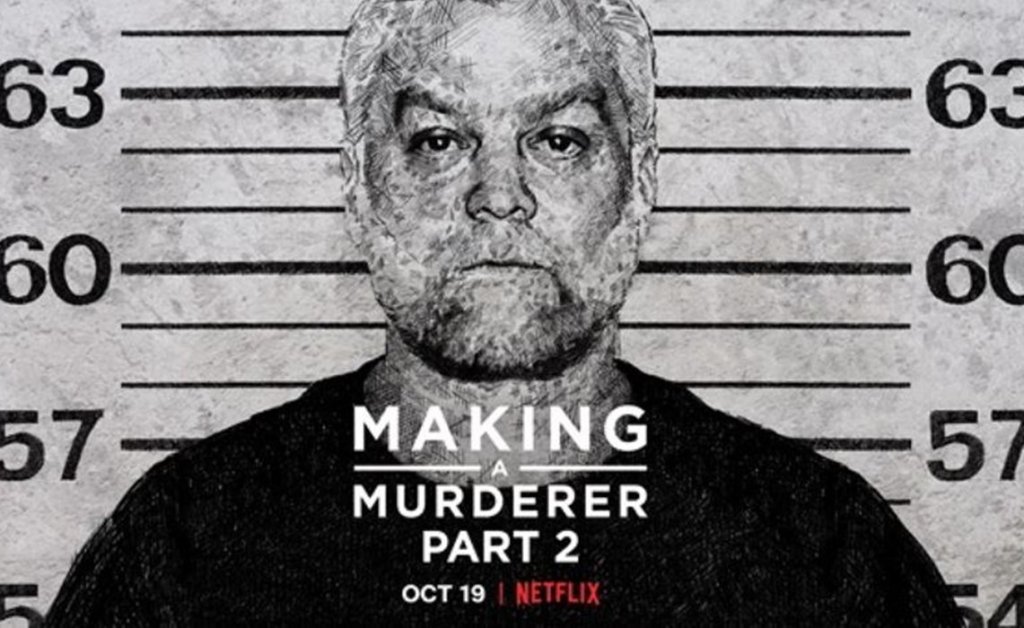
First, was the extension of the Making A Murderer case of Steven Avery, which can be credited for re-imagining the scope of this kind of “reality” show on Netflix in late 2015. Without a doubt, the draw of the first series was in showing how corrupt, ambiguous and vague the American criminal system can be. We know this from circus shows such as the OJ Simpson case, that capture a curiosity in the public that must be explored and documented. There is no point in saying, no don’t do it, because eventually we have to know, and current forensic science and film techniques allow us to approach it. Carefully. Oh, so carefully!
In this case, the much criticised production extracts further detail from an undeniably fascinating case of criminal negligence and injustice, without ever providing a new revelation enough to definitively say we now know enough to put it to bed. It focuses largely on the power of Kathleen Zellner as a lawyer of impeccable motives and results to prove the innocence of convicted men.
What we then get is 10 episodes of contrivance that increasingly try to convince us further that this is a miscarriage of justice that must be addressed. The continual message is that there is a conspiracy here, which makes for good TV. Someone doesn’t want this show to have an influence. Who is covering up what? And why is the justice system adamant in disallowing the revelations this show throws up so regularly? In the end it becomes less about the victim and the crime, as an indictment of a process that does not want to be examined. The power of this show has always been that something is rotten in Denmark. But what exactly?
There is no doubt at all that once involved you have to keep watching. It is exceptionally presented, and therefore successful as an entertainment because of that. The complexity of the argument comes not in the real recordings of conversations and evidence, but in the form of presentation as a TV show. A question, I am certain, the film-makers themselves constantly ask. It is about finding “truth” for the families of the victims; a crusade that may or may not include individuals wrongly accused of a crime.

The second series I watched demonstrated a sharp contrast to that ethos. The Keepers is a seven part mini series that despite setting itself up as a mystery still to be solved, knows from the start that by episode seven it has exhausted its material and you will get your chance to scream outrage against the evil priesthood and the shame of masculine power at its worst.
The power of this one is watching first hand testimony of survivors that fill in pieces of a puzzle that should never have been a puzzle if not for the indoctrinated protection of a few outdated ideas of power at its very worst. The sadness is that a good soul had to die to prove it, and that it was almost certainly not special, but indicative. Listen to the contrast of how much the key victim was loved against how much the perpetrators were reviled, even though it took half a lifetime to bring it all to context.
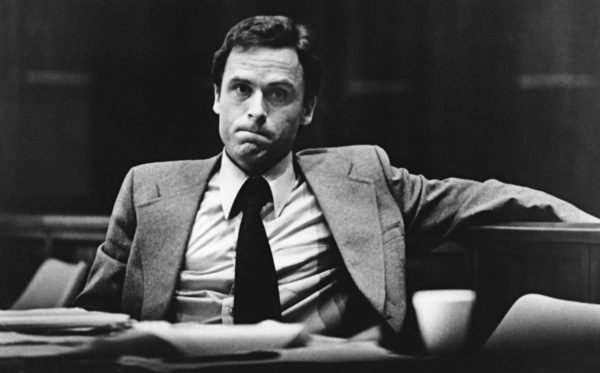
The third of these was the most powerful for me. It was Confessions of a killer: the Ted Bundy tapes. I mean… I had no idea. His name was in my imagination somewhere as a candidate for pure evil, but I had no notion of the level of media hype and drama behind and before this. Which is why I recommend this absolutely comprehensive 4 part series as the best in this dubious category I have yet to see.
With the benefit of at least some hindsight, we can see in this case the epitome of such terms as “serial killer” and “sociopath”. Looking at it in pure terms of an idea worthy of dramatic exploration, then this is it! And, interestingly, to this date, besides the Zac Efron misfire, it is a story beyond worthy of correct telling, the basis of which should be the real footage. Because nothing is more bizarre than the real man and what he not only attempted to do, but actually did.
Take the basic idea that one individual is capable of murdering 30 plus women and girls over a period of two decades… then accept that he systematically went back to the corpses and committed acts of necropholia and decapitation without ever skipping a beat in what he perceived as his true persona as a competent lawyer in his own right, and you have the stuff of true nightmare. Add to that the fact that he escaped custody twice, and defended himself in court to such a charming extent that the judge himself admitted an affinity with him, and you have the recipe for something that transcends fact and becomes myth. Don’t believe me? Watch for yourself.
Do I agree with these cases being shown as entertainment? No, I don’t. Essentially. Because they are rarely told from the victim’s point of view. We have a fascination with an unsolved mystery and grim death that is undeniably curious. The cult of personality pervades, and we should be wary of why we get involved with this stuff. As addictive TV it is undeniably going to continue. Please be careful of the line between understanding and entertainment. God forbid I would give these shows a rating, as if it were a thing worthy of encouragement. It is the most undeniable yet horrific side effect of our media growth imaginable. Watch at your peril. But watch discerningly with interest.
 The Wasteland