
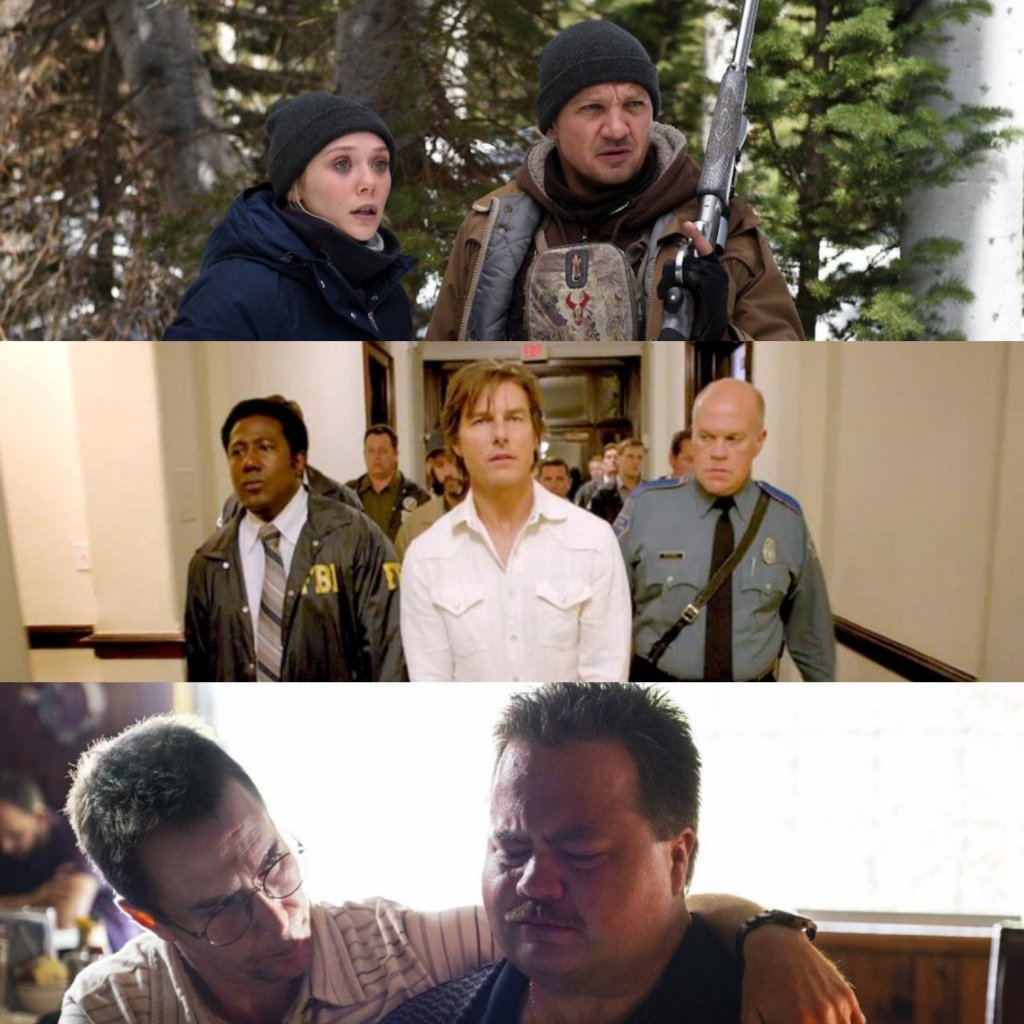
I have been absent from The Wasteland for a while. And, to be honest, I’m not watching as many movies as I used to. You know how it is: work, work, work. And sadly I don’t get paid for this… but I do miss it. Often I watch something, then write a post about it in my head, without ever finding time to actually write it. There is a list that exists of all the cultural things I have consumed that I want to write about – and it gets longer week on week! Much like my iMDb watchlist, which before yesterday sat at a modest 556 movies. I am 49 years old in 2 weeks… the chances of me ever watching them all are slim to none. The chances of me catching up on the blog are equally daunting. However…
Yesterday I had the day off work, and didn’t feel much like embracing the July heat any more, so I shut my curtains and indulged in a slow triple bill, picked from my backlogue of saved movies marked “this is meant to be good, but not massively keen”. As it turned out, and I didn’t realise until after the third movie had finished, they were all based on “true” / “real” events. Reason enough then, I thought, to bundle them together and talk about them as a whole, touching on the idea of film taking its inspiration from the reality of being human, and the messed up things that, yes, actually did happen…
Based on True Events films can be tricky. A double-edged sword in many ways. Obviously, the appeal of making that story into a film is that it is a cracking yarn, of human interest, and we respond to it in a way we don’t with pure fiction. But there is also a point where we sense that artistic license has been taken to embellish the tale, or the characters, to make them more dynamic and dramatic. Always, we must take what is presented not as a factual document or documentary, but as an entertainment. And in truth, we want it that way. Otherwise what we see is dry and weirdly undramatic, because reality is prosaic and abstract. Film must strive for a basic artistry, rhythm and poetic “truth” – otherwise we are left unsatisfied and often unmoved. Which is interesting in itself. For the bare facts alone should be enough to move us, but they often aren’t – as the worst documentaries can testify: No matter how good the story on the bare face of it, we demand for our imagination’s satisfaction that leaps of credibility and romance are taken. Especially in how these stories are concluded. We absolutely must be left with the sense that justice has been served. Legal or otherwise. Someone corrupt must fall. Someone righteous must prevail. And so starts the conversation.
So, let’s look at all three in detail. It’s a little unfair to tar them with the same feather… very different beasts they all are…
Taylor Sheridan
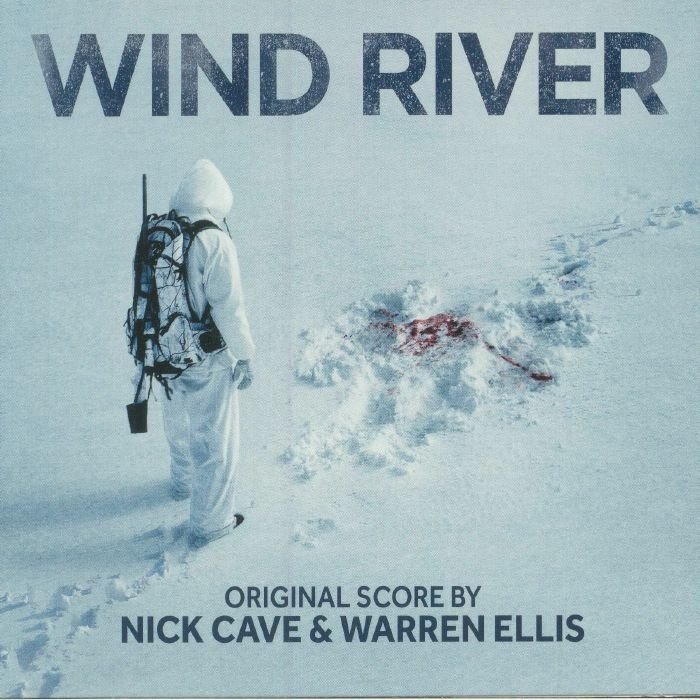
Sitting at an incredible score of 7.7 on iMDb, I was very curious about this one, hence it being the first I went to. I adore Taylor Sheridan’s other recent work, Hell or High Water (2016), which just ticks so many boxes. His thing seems to be writing characters that are neither good nor bad, just either moral or immoral, taking the road and dealing with the consequences. So it is with Wind River. Set on a modern day Indian reservation where the law is not strictly American Federal until shit gets real. And we start there: a shocking mystery of a young woman raped and killed and left in the wilderness with no apparent explanation.
Jeremy Renner is the white hunter/tracker that discovers the body. Elizabeth Olsen is the naive FBI agent sent there as a token to solve the case. Outside of this unlikely pair is a whole world of Native American culture and politics that want to thwart them for being “other”. This is someone else’s business. No one cares, except that they do. And that makes for a riveting drama from the start. Why do they care? Well, this is revealed piece by piece in a wonderfully paced script, that allows Renner especially to shine. His character becomes so compelling, and the job he is doing in conveying the pain so consumate, that you have to wonder whether we have been wasting this talent on a minor Marvel character during his peak years…? He has two or three speeches in this movie that radiate longevity. For sure the one about grief to the father of the murdered girl will live long in my consciousness. I may well quote it sometime, it is that good!
I have to say, I was thrilled by this movie. It surprised me in all the right places. The dour Nick Cave score matched the mood to perfection; the acting was great; and the script impressed me most. In terms of direction, maybe only slightly above average, and that is where I might fault it. It seemed always like a low budget thriller, wanting to be more but never daring to go the whole way. It’s qualities are undeniable, and I recommend it as a watch, perhaps late at night when you are welcoming dark thoughts. It simply isn’t as good as Hell or High Water. But it is a cracking story, well told, and with a great, satisfying, ending. It may get even better on repeat viewing. I can’t be entirely confident about that. But I like that feeling. It may grow on me. It has a certain magic I can’t put my finger on just yet. Which is a great sign!
Decinemal Rating: 73
Doug Liman
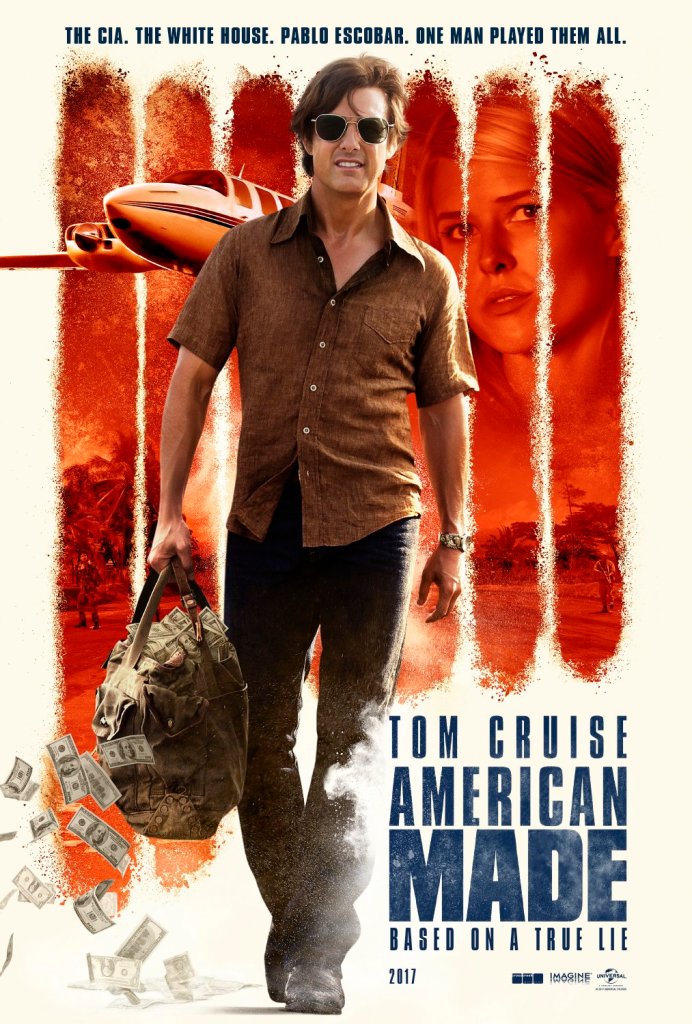
I have less to say about this one. Simply because the tone is lighter. Make no mistake, however, this is an entertaining movie I would highly recommend. Doug Liman has given us The Bourne Trilogy, so, you know, his work is kinda done. With this, I see his pitch crystal clear, and good on him for following it through with panache. It is fine. Tom Cruise is great. There is nothing wrong with it. It’s great. Except it is nothing new. Don’t expect anything new. It isn’t there. What you do have is fun. With a wink and a smile. And the odd moment of gravitas to put it all into context. And the question always remains: is this man to be idolised for his bravado, or vilified for breaking the law?
Tom is Barry Seals (does he have a character name? He is always Tom in my head) is a TWA pilot of such skill and character that he is roped into a life of crime ferrying the drugs of Cental America to the States for big cash. He meets Escobar etc al. He almost crashes. He doesn’t. He rides his luck. His wife doesn’t know. The government try to use him, he rides it. Blah blah blah. Is he a criminal or a hero? This is the question. Using a convention of camcorder monologues, we get both the timescale and the changing views and moods of the central character over time. From disbelief to excitement to fear and even regret, we get to see his inner journey, which is important, because without it this man is only ever in it for the money – of which there is a lot!
I haven’t watched Narcos, but I have seen Breaking Bad and Blow, starring Johnny Depp. And I reckon they are aiming for a blend of those. Making drug and arms running into a dangerous game that contains thrills and glamour as much as danger and dire consequences. We get the 80s political backdrop on the war on drugs, and some nice real footage of the Reagans, as context. But in essence we are on Tom’s side despite his flaws, simply because he is underdog that plays the system – as much as we love to side with DiCaprio’s character in Catch Me If You Can. Domhnall Gleason provides the link to authority here, but he is no Carl Hanratty. He is presented as corrupt and manipulative, to show that this isn’t about right or wrong, but about business, politics and hard cash.
Some fine supporting turns also come from the always impressive Jesse Plemons and Caleb Landry Jones, who add some welcome colour, if both a little underused. At the end of the day this is a Tom Cruise movie, and therefore any depth of meaning is sacrificed for a fast pace and a fun ride. Of course, he flies his own planes and does all his own stunts. You feel that he is having a whale of a time, especially with the accent, and it is often a joy to watch. Ultimately though, it is fairly disposable. You aren’t going to go out of your way to tell anyone this is an amazing film. What you will say is, yeah, I liked it, give it a go if you have 2 hours to kill. A perfectly fine average entertainment.
Decinemal Rating: 68
Clint Eastwood
This slightly hidden gem marked Clint Eastwood’s 40th film as a director. I have to say, a lot of his output in the last 20 years has left me baffled or merely cold. I think Gran Torino is grossly overrated. I think American Sniper is misconceived and problematic. I think Sully: Miracle on the Hudson, J. Edgar, Invictus and The Changeling are terrible misfires and a waste of talent. I often find him mawkish, sentimental and preachy – albeit that without fail you can see the huge dollops of class and artistry behind all his efforts. Even Million Dollar Baby loses me in the final act when it just becomes comedically emotional. The last of his films I properly enjoyed is probably Mystic River, and that was 2003. It also hasn’t aged that well.
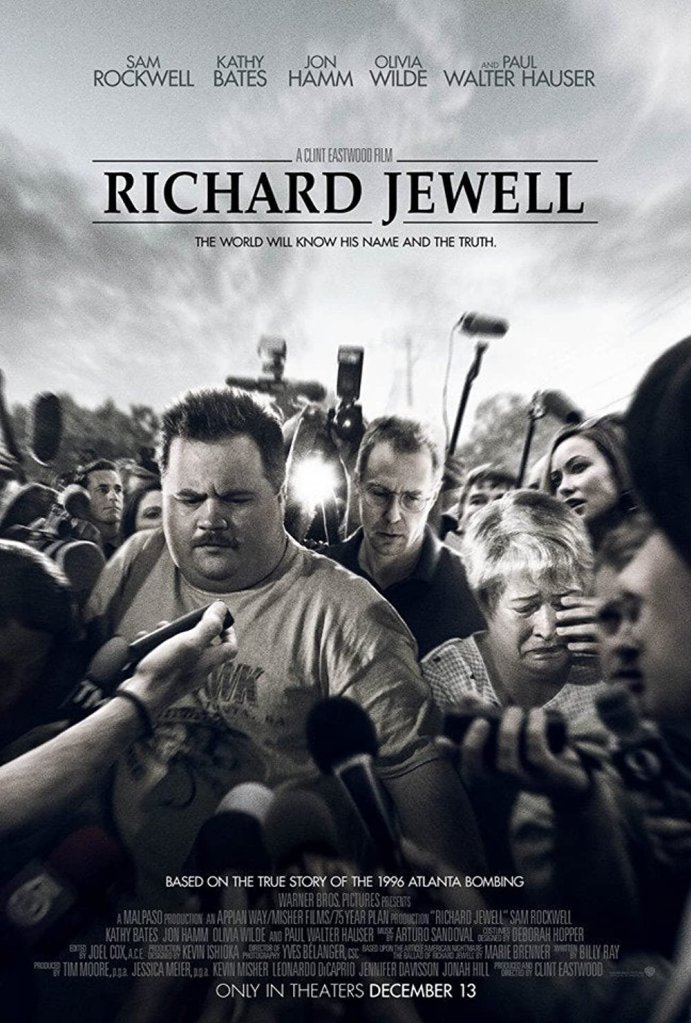
Surprised to say then that I loved this one! Make no mistake, it has the pace of the man with no name himself inching his way through the script on a Zimmer frame. But its qualities far outweigh the sleepy, laconic tone. I never really wanted it to speed up, so involved in the story and expert acting as I was. It centres on the true events of the eponymous security guard who was shifted in the public eye from hero to suspect and back again, following the bombing at the Atlanta Olympics of 1996. I remember this story, and I love the Olympics; I am also fascinated by America’s approach to terrorist events and finding scapegoats – so it was no reach for me to become involved in this tale of a small man with dignity against the machine of beurocracy.
The casting is impeccable, first off. The can do no wrong Sam Rockwell as Richard’s lawyer Watson Bryant, is as pitch perfect as he always is. His versatility and likeability never ceases to impress. Then there is Kathy Bates as Richard’s long suffering mother, who delivers an Oscar nominated performance of quiet grace – her one speech in defense of her son could leave no dry eye in the house. Jon Hamm, as the morally dubious state prosecutor, and Olivia Wilde, as the vaingloroius reporter, are also impressive and perfectly cast. But it is relative unknown Paul Walter Hauser, as Richard, who steals the show in every scene. This is a character study to be admired. Every detail of his performance is multilayered and effective in conveying the innocence of a man who loves his work, his family and his country. Surely, if he had been better known, this would also have merited an Academy nomination.
The thing I really liked about it was how underplayed it all was. In the same sense that made Spotlight, so moving. The events themselves are the story. The people involved are the fuel to the story, not the other way around. I come back to the phrase “quiet dignity” – the secret of this film’s effectiveness. Clint has aimed for this tone before, but this time he gets it right. So, what stops it being a brilliant film, as opposed to merely quite a good one, which it surely is? Perhaps that it lacks an entertainment aspect that both the previously mentioned films possess. It is elegant without dynamism, perhaps. Nevertheless, it is a solid film, and does in some way involve the payoff of justice eventually being served. An imperative for the “based on real events” genre.
Decinemal Rating: 71
In conclusion, these three films have made me wonder at what it takes to tell a true story as a work of fiction. As this is my first post in a while, I would like to hear your thoughts. Especially what you see as the benchmark for the best “true” story ever told in cinema history. I have my shortlist, but I’d like to hear yours. Thank you for reading this far. Please do share this to anyone who you feel would like it. I have lost some momentum by not posting very regularly, so it would be gratifying to build it up again.
Shantih Kx
 The Wasteland