

The first of three compelling yet contrasting documentary “films” I am reflecting on today is the insanely ambitious and often explosively insane Wild Wild Country, which was split into a six part mini series by Netflix, but that the creators call a 403 minute cohesive film, intended to stand as one document. It won the Primetime Emmy for best docu-series, but I agree, it could also have qualified for a best documentary Oscar had it not been so prohibitively comprehensive in length.
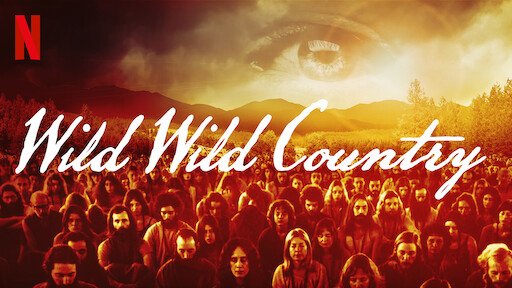
It focuses on the rise and multiple controversies surrounding the religious figure of Rajneesh, later renamed Bhagwan, and finally reinvented as Osho after his death in 1990. Some called him a “guru”, some called him a “sex guru” (due to his open minded policies on promiscuity), and some simply condemned him as the leader of a dangerous cult that threatened mainstream American ideology. To this day, his influence and teachings have many followers and believers, but this film looks directly at the commune created in his name in Oregon in the mid 1980s.
What is fascinating is how far you can go down the storyline with wonder and awe at what was at first achieved, and with a respect for an effort to create a free new world idea outside of the restraints of Western thinking. Seeing thousands of people in red robes seeming happy and united is at first no bad thing in itself. Rajneesh himself is clearly a well educated and charismatic figure who seems largely benevolent and well meaning. A lot of what he says makes absolute sense. But what becomes apparent in time is how no Utopian paradise, no matter how well intentioned can escape corruption, greed, malice and jealousy.
The threat to the peaceful lifestyle and sense of family that many were seeking was ultimately ruined by the force of those outside who saw it as an evil intrusion into their own idealistic bubble. And then eventually damaged beyond repair by an inside element full of malice and a hunger for power. That person was Rajneesh’s personal secretary, known as “Ma”. The parts of the story involving her are by far the most interesting, as you would do well to create such a manipulative, power hungry personality in fiction. Mass poisonings, a political assassination attempt, financial corruption and media manipulation are just some of this woman’s crimes. It becomes apparent that she is as crazy as any Bond villain, and you can almost not believe how far she was willing to go to keep control for her own means.
I found it all very informative about the place and period, and about issues that would always arise with any counter-culture movement. The presentation never preaches either side of the argument as right or wrong, which is essential in making up our own minds. Who do we believe, who do we trust, where do our own ideals dovetail with those voices most forcefully expressed. We have more or less been taught that no matter how attractive a cult may seem on the surface, there will always be more to fear than to admire and embrace. This work as a whole reinforces that, but with caveats, as more often than not the ways of the peaceful, true hearted folk, outshine the anger and hate of those presenting themselves as “normal”.
There is enough content here to spark endless late night debates and arguments. Which is what I like. I never felt like I was being forced to any conclusion, only to keep an open mind and to question. If only more documentaries were skillful enough to do this. Highly recommended viewing, even though the entertainment aspect may be tested by the time required by the audience to fully invest.
Rating: 8/10
By stark contrast, Why Did You Kill Me? is poorly presented and a perfect example of how a bad Netflix true crime documentary can leave a sour taste in the mouth. The filmmakers commit the epitome of Crime Doc sins by having a clear point to make before we are even invited to think for ourselves. The family of a murdered young woman talk righteously about how they were forced to hunt the killer themselves, with the help of a catfishing MySpace page, due to their perceived negligence of the investigating police force.
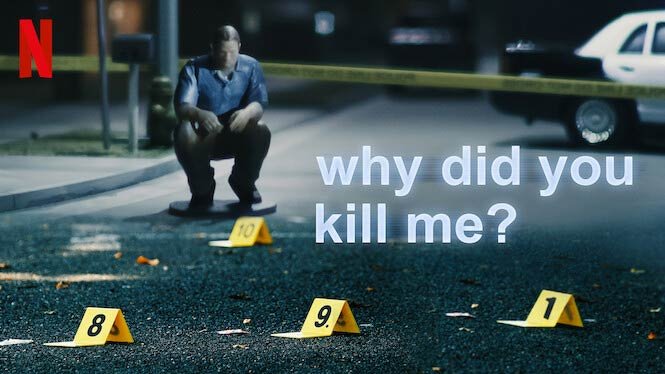
What is shown and heard is troubling, both in how it seems to skirt and ignore certain elements of the case while zooming in on the opinions of the family and their need for what amounts to revenge as opposed to real justice. Don’t get me wrong, it is awfully sad that this young woman was needlessly shot dead, and that the justice system may have failed the surviving relatives – but do we need to see such one sided vitriol presented as praise of vigilante intervention?
The real issue here is simply that it is a mess as a film. Poorly edited and paced, repetitive and often pointless. The parts where someone pushes a toy car along a model street to recreate the crime just made my stomach churn at how unsensitive and preachy it all is. It also feels like it doesn’t enlighten anything that a 5 minute summation of events couldn’t have done just as well. In the worst way we are intruding on a personal grief and invited to watch their pain for the sake of morbid curiosity. I would only recommend spending 83 minutes of your time watching this if you want to see how it should not be done.
Rating: 4/10
The third film in review falls somewhere inbetween the quality and impact of the previous two. It also feels like something that would be worthy of a follow up project, be it a documentary or a feature film based on events. The real life case of Amanda Knox, her conviction in Italy for murder, and her later exhoneration is compelling on several levels. It feels like the beginning of a story rather than something ready to be boxed away and finalised.
I remember the media hype around this when the case hit the news. It was a massive news event from the start, with many believing her innocent and equally many convinced she was guilty. A lot of it had to do with nationality, and how an American citizen could be mistreated by a foreign justice system, despite innocence or guilt. The interesting starting point when looking at it is how Knox herself seemed to implicate herself as guilty, only to change her story and pin her freedom on the fact that the investigation was not conducted to a high standard and that she was not given access to a lawyer on her first arrest.
Add to that the fascinating footage of her being comforted by her boyfriend live on camera shortly after the body was discovered. The argument was that this person was not behaving in any way like an innocent victim, but rather her body language and facial expression denoted guilt. We were all invited by the media and again several times in this film to look at those images and decide for ourselves, based on virtually nothing else, whether this young woman was a ruthless and heartless killer. What is compelling for those unfamiliar with the details of the case at first, is how much we can be manipulated to think one way or another by such images. Yes, everything about her screams guilt without the facts – a view the Italian police also subscribed to.
In 2016 we already knew that Knox had been released from prison and the more likely killer apprehended and sentenced. It turned out that the case was based entirely on false evidence and shoddy investigative procedures. Does that mean the case was now resolved? No, not at all. Something about the entire thing stinks. The victim, the eventual convicted killer, Knox and her boyfriend all knew one another, and for sure something was going on that we may never fully know the truth of. Therefore we don’t only have a true crime draw into this story, but the sense of a mystery unsolved, which audiences of this stuff naturally adore to a morbid degree. Our opinion of it becomes part of the “entertainment” – as in such astonishing works like The Staircase, which remains the most watchable piece of true crime theatre I have seen. We just need to be careful how much our curiosity draws us in to become jury, judge and executioner.
Rating: 7/10
In conclusion, it still troubles me that I like to watch this kind of thing. I don’t ever feel entirely comfortable doing it, but I would rather know the difference between good and bad filmmaking and journalism for myself. Which is why I think a good documentary should be praised and bad ones vilified. What do you think? As always, comments and constructive counterpoints welcome.
 The Wasteland